The syGlass Scientist

Conversations on syGlass’ Impact and Collaborations

Nathan Spencer

syGlass Fall 2026 Release: v2.8.0

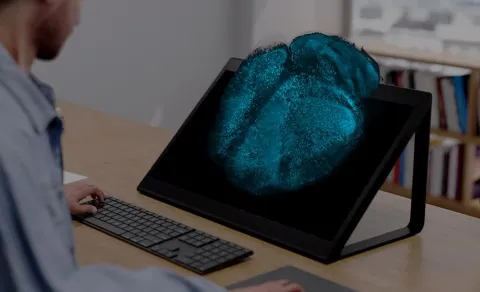
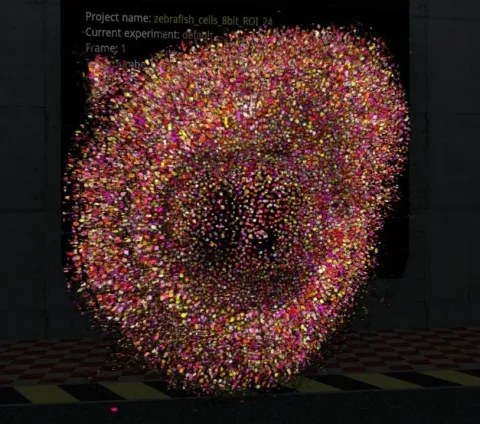
Fall is here, and with it, a new version of syGlass: v2.8.0. This release gives you more control over multichannel data, brings Cellpose-SAM segmentation into full 3D, opens syGlass up to a new family of glasses-free 3D displays, and optimizes many of syGlass’ basic operations for even greater performance across a broad range of use cases.

Read More
Michael Morehead

Can We Make Assessments Uncheatable? Rethinking How STEM Students Demonstrate Mastery

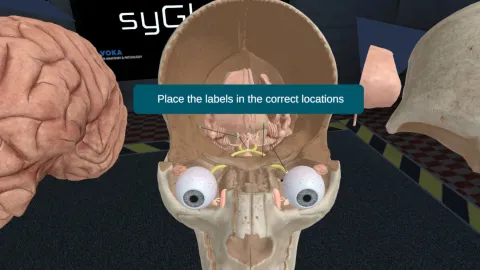
I’ve always been fascinated by how we organize assessments for students. In my life, I've often been surprised by how strict test security measures, like those for the SAT and MCAT, can be. After trying to accurately assess students later in grad school as an aide and instructor, I was also surprised by how difficult it is to feel confident in the validity and security of the exam.

Read More
Jason Osborne

Midland ISD Takes the Next Step in Immersive STEM Education with syGlass Learn

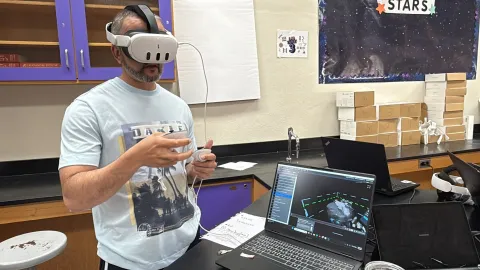
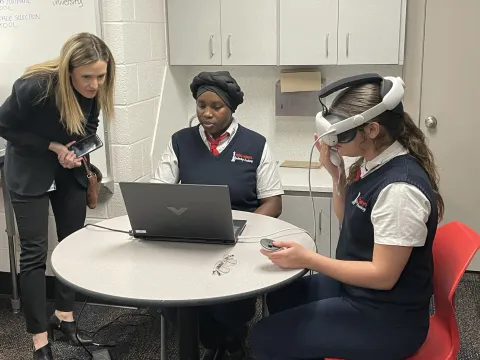
The future of STEM education is taking shape in Midland, Texas, where students are going beyond the textbook and stepping inside real scientific datasets. Through a $250,000 STEM grant from the ExxonMobil Foundation, Midland Independent School District is introducing the syGlass Learn Immersive Science Curriculum across all four of its middle school campuses, bringing state-of-the-art virtual reality learning to seventh- and eighth-grade science students.

Read More
Michael Morehead

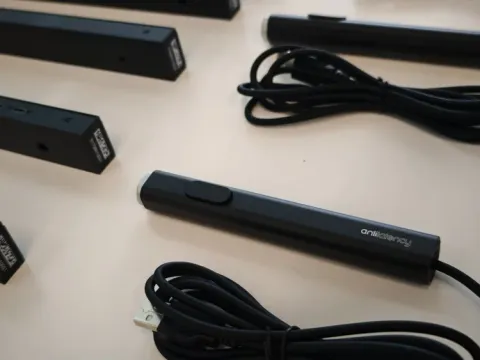
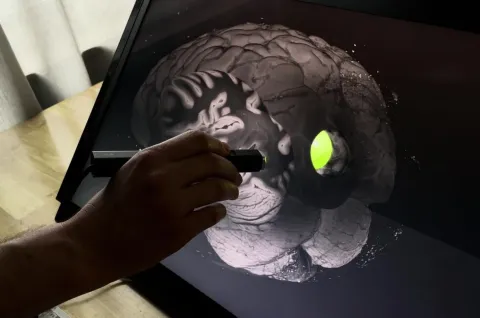
Touch the Third Dimension: Introducing the syGlass 3D Stylus

When we first brought syGlass to Sony’s Spatial Reality Display, the reaction was immediate: people leaned in, smiled, and reached for the data. That was the magic of it. Datasets that usually live behind a flat screen suddenly looked like real 3D objects floating in space. But that also revealed the obvious next problem: once the data looks like something you can touch, a normal mouse and keyboard starts to feel pretty limiting.

Read More
Nathan Spencer

syGlass Summer 2026 Release: v2.7.0

Summer is here, and with it comes a slew of exciting new additions in the latest release of syGlass: v2.7.0. New features for tracking objects that split and merge through time, labeling landmarks across samples, accessing the full suite of syGlass tools on Sony’s Spatial Reality Display (SRD) via a 3D stylus, and much more, are all available in this new version.

Read More
Michael Morehead

Heart Segmentation with WVU Medical Students

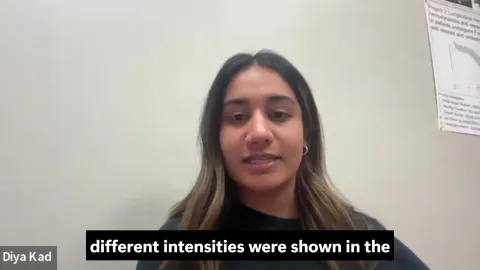
In a recent interview with West Virginia University (WVU), medical students Diya Kad and Anthony Colangelo, we explored how syGlass VR is revolutionizing the way future doctors interact with complex cardiac data. By moving away from traditional 2D monitors and into an immersive 3D environment, these students are now getting immersed in real medical scans, leading to a mastery of anatomy and cardiology anatomy.

Read More
Brandy Freitas

syGlass Wins Two Awards at HarvardXR 2026

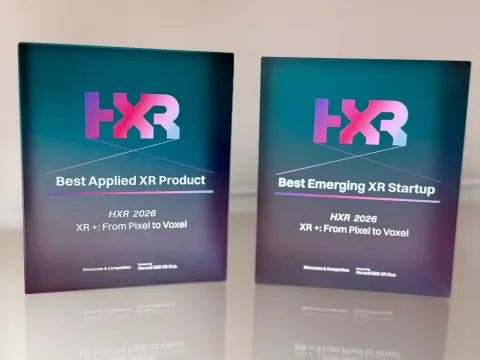
This spring, I had the opportunity to pitch syGlass at the HarvardXR Conference 2026: XR+: From Pixel to Voxel, held at Harvard University’s Gund Hall. The conference itself had impressive reach, featuring more than 30 speakers from all over the world, 14 topic sections, in-person events, a showcase, and a program spanning XR, AI, healthcare, education, gaming, spatial understanding, immersive arts, and human-centered design.

Read More
Nathan Spencer

syGlass Winter 2026 Release: v2.6.0

Although it comes on the heels of our last feature release less than three months ago, syGlass v2.6.0 has no shortage of new content to help create new workflows and streamline old ones. Read on to see what’s new, check out the full changelog, and of course don’t hesitate to send us a message to get a new license, to renew an old one, or to ask any questions you might have.

Read More
Nathan Spencer

syGlass End-of-Year 2025 Release: v2.5.0

2025 may be drawing to a close, but we at syGlass haven’t yet called it a year. This holiday season, we’re delivering support for lots of new file formats, alongside improvements to image visualization, segmentation, and narration creation.

Read More
Michael Morehead

How Open Source Microscopy is Solving the Funding Crisis: Insights from the mesoSPIM 10-Year Symposium

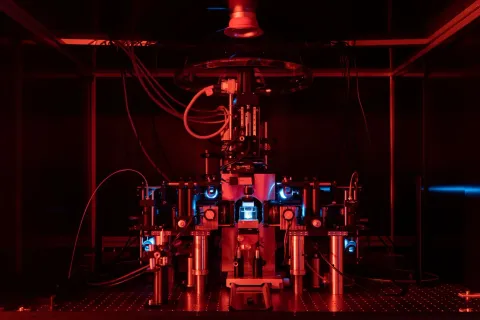
If you're a researcher trying to secure funding for advanced imaging equipment right now, you know the challenge. Universities and research institutions are tightening budgets, and that $600,000 microscope you need to stay competitive feels increasingly out of reach. Meanwhile, science doesn't wait. Your questions are getting more complex, your samples more demanding, and your competitors aren't slowing down.

Read More
Nathan Spencer

syGlass Summer 2025 Release: v2.4.0

syGlass is a multipurpose tool, with applications in a wide range of fields that rely on the visualization and analysis of 3D image data. Today, automated annotation is a shared interest of researchers in nearly all of these fields. Our summer release of syGlass v2.4.0 brings with it new auto-annotation techniques that can be applied to a wide variety of workflows, alongside a slew of other improvements.

Read More
Jason Osborne

STEM Without Borders: syGlass and NCSSS Connect U.S. and China Through Innovation

In June 2025, syGlass cofounder and CEO Michael Morehead and Chief Business Officer Jason Osborne journeyed to China as part of a prestigious U.S. STEM delegation, leading efforts to forge bold new frontiers in global education and scientific collaboration. Representing the cutting edge of immersive technology, syGlass leadership engaged directly with Chinese educational leaders to explore how virtual reality can transform STEM teaching and research on a global scale.

Read More
Jason Osborne & Nathan Spencer

Tooth Be Told: Prehistoric Sharks Didn’t Need Serrations to Snack on Whales

When we think of the great white shark, we often picture its iconic serrated teeth tearing through prey in a swift and deadly strike. These blade-like teeth, shaped by millions of years of evolution, help the modern Carcharodon carcharias feast on energy-rich marine mammals like seals and dolphins. But what about their ancient relatives, before those serrated edges ever evolved?

Read More
Brandy Freitas

A Night at the MIT Museum

Last week, I had the pleasure of giving a talk at the MIT Museum's After Dark series. The crowd was there to explore the theme of monsters: "It is said that Monsters reside in spaces not well understood. Join us as we navigate unchartered waters and explore unusual creatures real and imagined." — MIT Museum

Read More
Nathan Spencer

syGlass Spring Release: v2.3.0

Our spring update is here in the form of syGlass v2.3.0, with new features that apply to a broad range of use cases, from image analysis and visualization to immersive content creation. Whether you’re an experienced syGlass user or only just becoming interested in the benefits of virtual reality (VR) for 3D imaging, we would love for you to give it a try: just send us a message to get started.

Read More
Jason Osborne

Bergen County Academy’s Vision for the Future of Education with syGlass

In a classroom at Bergen County Academies, located in northern New Jersey, a group of students slip on VR headsets for the first time. Their faces lighting up as they immerse themselves in a world of three-dimensional scientific data. One student zooms in on an MRI scan, rotating it in space to examine the intricate details of a brain tumor.

Read More
Nathan Spencer

Announcing syGlass v2.2.0

syGlass v2.2.0—our first release of 2025—is here. Featuring the introduction of voice commands, improvements to the narration playback experience including video-like seeking and embedded assessments, mask customization features, and checkout of licenses for offline use, we think it has a little something for everyone.

Read More
Jason Osborne

When a Tongue Becomes a Parasite’s Throne

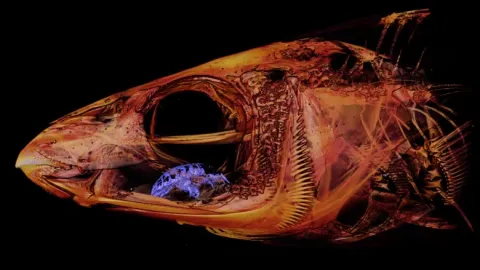
Imagine a creature so sinister it hijacks another's body, not to kill but to replace a part of it. Meet the tongue-eating louse (Cymothoa exigua)—a parasitic isopod that enters a fish's mouth, severs its tongue, and positions itself as a grotesque replacement. Though unsettling, this bizarre relationship allows the fish to survive, albeit at a grisly cost.

Read More
Derek Harmon, PhD

Immersive Virtual Reality is a Game Changer for Anatomy Education

While the use of extended reality (XR) within higher education has steadily increased in popularity since the launch of the Oculus Rift headset in 2013, there has been an ongoing debate between virtual reality (VR) and augmented reality (AR) as the ideal learning platform. As an early adopter of XR technology at UCSF, I quickly noticed a key metric that seemed important in the efficacy of these tools: immersion. Now, a new meta-analysis of XR anatomy training studies highlights immersion as a dominate factor in improvement of anatomy knowledge scores.

Read More
Michael Morehead

Unlocking the Hidden Beauty of Science with Virtual Reality and Direct Volume Rendering

Lightsheet? microCT? Serial block face electron microscopy? Have you ever heard of these technologies? Very few members of the public know of the silent imaging revolution happening right now in the life sciences. In fact, in 2023 alone, there were 7,000 manuscripts about lightsheet microscopy, and 17,000 manuscripts about microCT—new technologies that can produce stunning high-resolution 3D image volumes.

Read More
Michael Morehead

syGlass v2.1.0 Release

At syGlass, we’re constantly pushing the boundaries of what’s possible in virtual reality and scientific visualization. This week, that culminated in the release of syGlass v2.1.0, a major update with a focus on automated and manual volume segmentation routines.

Read More
Susan Gentz

Education & Medicine: Bringing Science to Life with Virtual Reality

Gone are the days of the COVID-19 pandemic- so why are we still asking ourselves where the people are? Shouldn’t they have returned to the workforce over four years after the country shut down? If the shortages are in full force now, how can we work to create a pipeline and cut down the shortages for the future?

Read More