
Can We Make Assessments Uncheatable? Rethinking How STEM Students Demonstrate Mastery
I’ve always been fascinated by how we organize assessments for students. In my life, I've often been surprised by how strict test security measures, like those for the SAT and MCAT, can be. After trying to accurately assess students later in grad school as an aide and instructor, I was also surprised by how difficult it is to feel confident in the validity and security of the exam.
Today, educators face what assessment specialists call the security-validity paradox. To make an exam highly secure on a limited budget, you often have to resort to rigid formats (like heavily timed, closed-book multiple-choice tests) that end up measuring recall speed and anxiety management rather than deep comprehension.
But academic integrity challenges are not new. Research conducted well before the emergence of generative AI found that academic misconduct was already widespread. Although it depends on how “cheating” is defined, studies have reported a range of 66% to 80% of undergraduate students admitting to some form of academic dishonesty (McCabe et al. 2001).
And in a post-AI study, Chen et al report an average rate of misconduct at 72%, illustrating that AI hasn’t changed the rate of academic misconduct, only the manner of the violation (Chen et al. 2026). These findings suggest that concerns about the validity and reliability of traditional assessment practices predate today’s AI-driven challenges – this is a human condition, not a new development.
When we spoke with dozens of school districts using syGlass, we kept hearing the same specific pain point. Administrators desperately needed a portable education system to deliver high-quality science instruction to rural populations. But sending assignments home comes with a massive catch: how do you accurately assess a student's knowledge when they have Google and AI chatbots in their pockets?
(Remote) testing has become almost impossible to trust, so we decided to fix it.
We built syGlass Learn, a specialized build of syGlass that solves the remote assessment problem by taking the student out of their distracting environment and locking them into the curriculum.
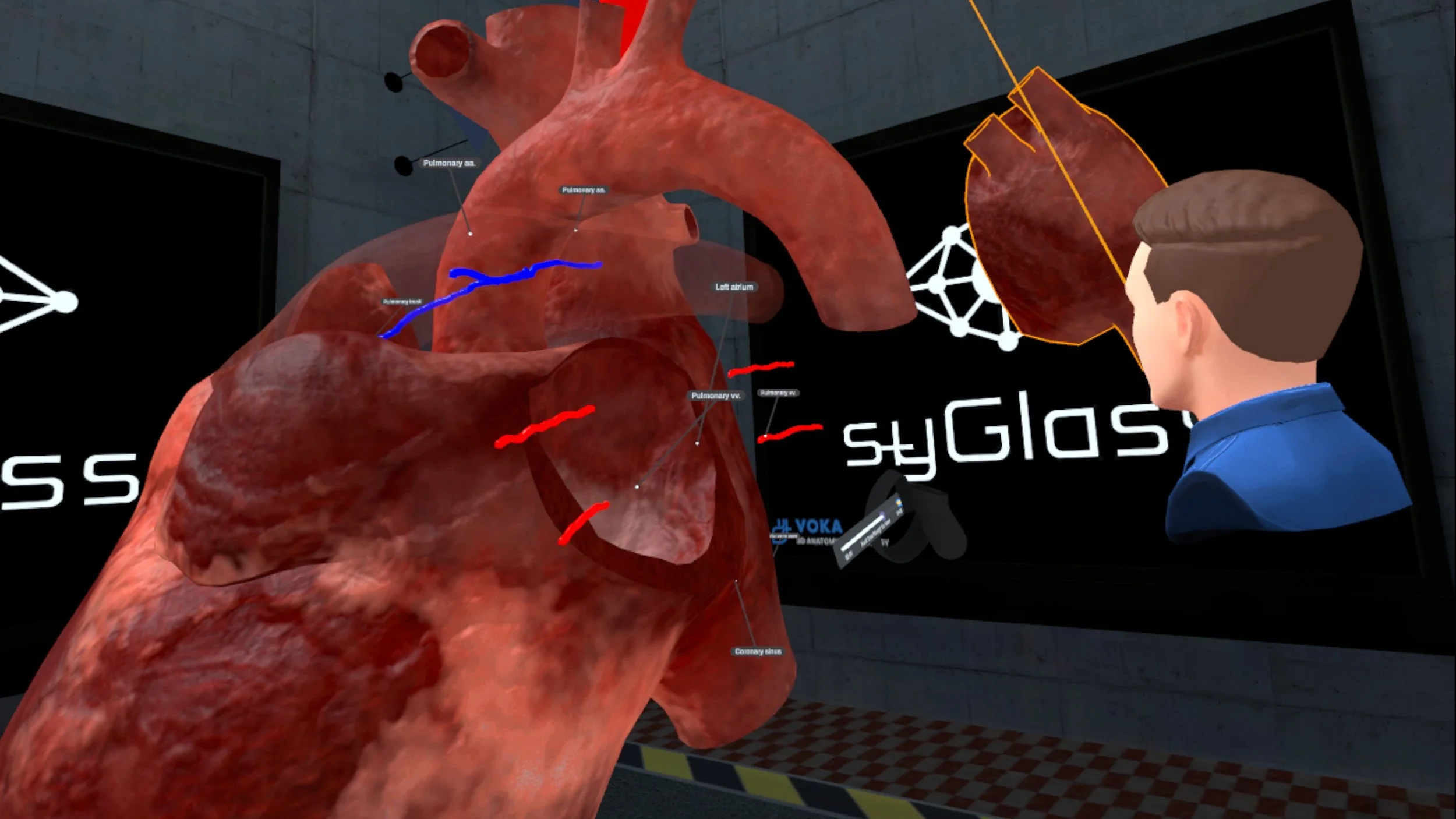
Figure 1: Students watch a real professor of the topic lecture and place 3D labels and drawings to explain complex concepts, like this walkthrough of the blood flow through the heart.
When a student puts on the VR headset, they are fully immersed. They cannot reach for their phone, they cannot open a new browser tab, and they cannot pass information to a computer. The built-in assessment tool guarantees that the answers coming from the student are entirely their own.
syGlass Learn is an immersive VR environment to experience lectures recorded by experts in the field as they guide you through 3D models of the subjects at hand. You can pause, rewind, replay, and interact with the scene at any time, and each immersive lecture features an interactive assessment, automatically graded and stored for teacher review. We’re really looking forward to seeing how this “personal professor on demand” model changes how students learn and review the subject.
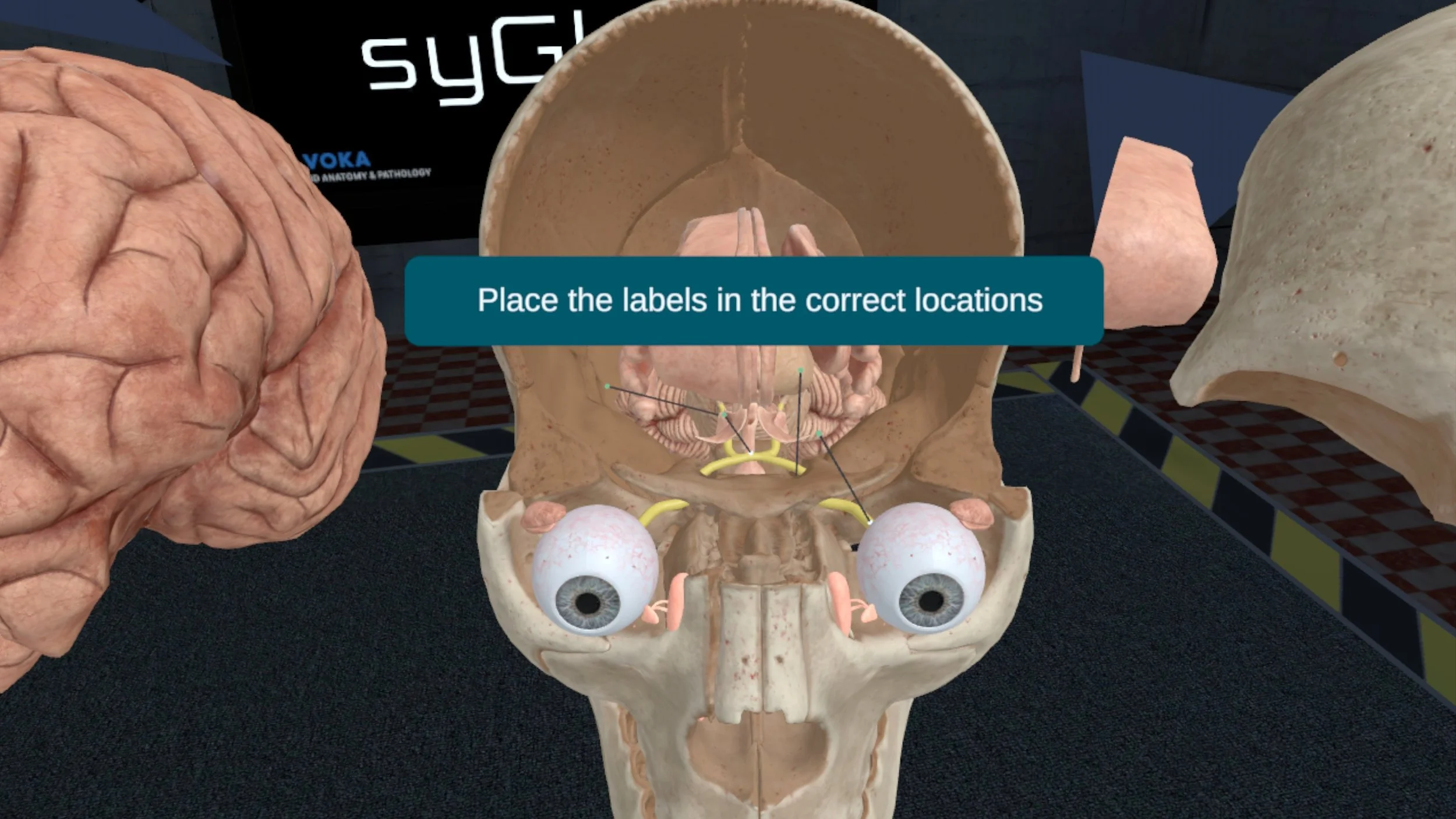
Figure 2: Assessments are done in 3D; students drag 3D labels onto pins, just like in a real anatomy cadaver dissection course. Would you study harder knowing that you’ll be facing down this assessment alone and isolated in VR?
Once the lecture is complete, we get back to the heart of the matter: the assessment! In Learn, students are dropped into a spatial assessment, where they’re challenged to label 3D objects. They must grab the object of interest physically, and maneuver it in space until they can find the specific label point. This kinematic element further enhances memorization and facilitates the beginning of a memory palace.
But most importantly, and excitingly, the assurance that the digital answers from the student came from their mind alone. In virtual reality you cannot share your perspective,look up outside resources, or ask AI for assistance. And we’ll deliver the answers automatically to the teacher of record, with classwide and individual statistics—without any manual intervention.
There are so many interesting questions here: Will students take their studies more seriously if they know they’ll be alone in the VR without any help? How will teachers utilize this accurate knowledge of their student population? Will classes move through material faster with so much assessment burden removed from the teacher’s workload? I’m really looking forward to finding out with you.
TLDR: syGlass Learn is about providing equitable access to top-tier education, regardless of a student's zip code.
Guided Narration: Bring the expertise of leading researchers and professionals directly to students in rural communities, providing access to world-class instruction and experiences that would otherwise be difficult to reach
True Portability: A VR headset can travel anywhere, bringing a state-of-the-art science lab to the most remote corners of a district.
Self-Paced Mastery: Because the assessments are secure and automated, rural students can test their knowledge on their own time, repeating the material until they achieve true mastery.
Locked-In Assessments: Students cannot access outside materials or AI, making our assessment platform perfect to give accurate measurements of your students.
Auto-grading: Teachers can quickly see how students are doing and provide feedback without having to manually grade every activity, which can be especially helpful when facilitating remote or independent learning.
We built it because districts needed a reliable, portable, and secure way to guarantee their students were actually learning.
Want to see how syGlass Learn can secure assessments in your district? Reach out to us at info@syglass.io.
